Free tool · works with the dollar in your pocket
Which Federal Reserve Bank issued your dollar?
Every US bill names its issuing bank right on its face. Find the round black seal left of the portrait and type its letter, or type your whole serial number. Nothing you enter leaves your browser.
The anatomy
What every mark on your dollar means
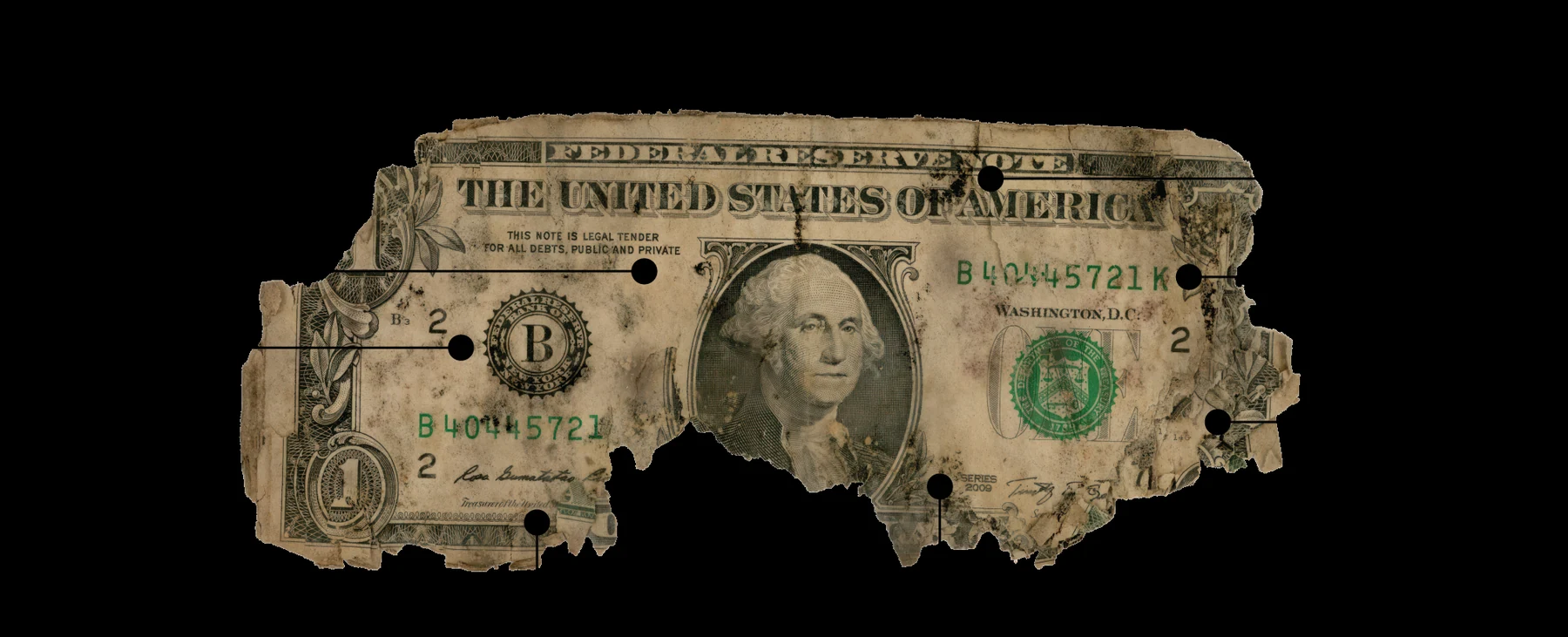
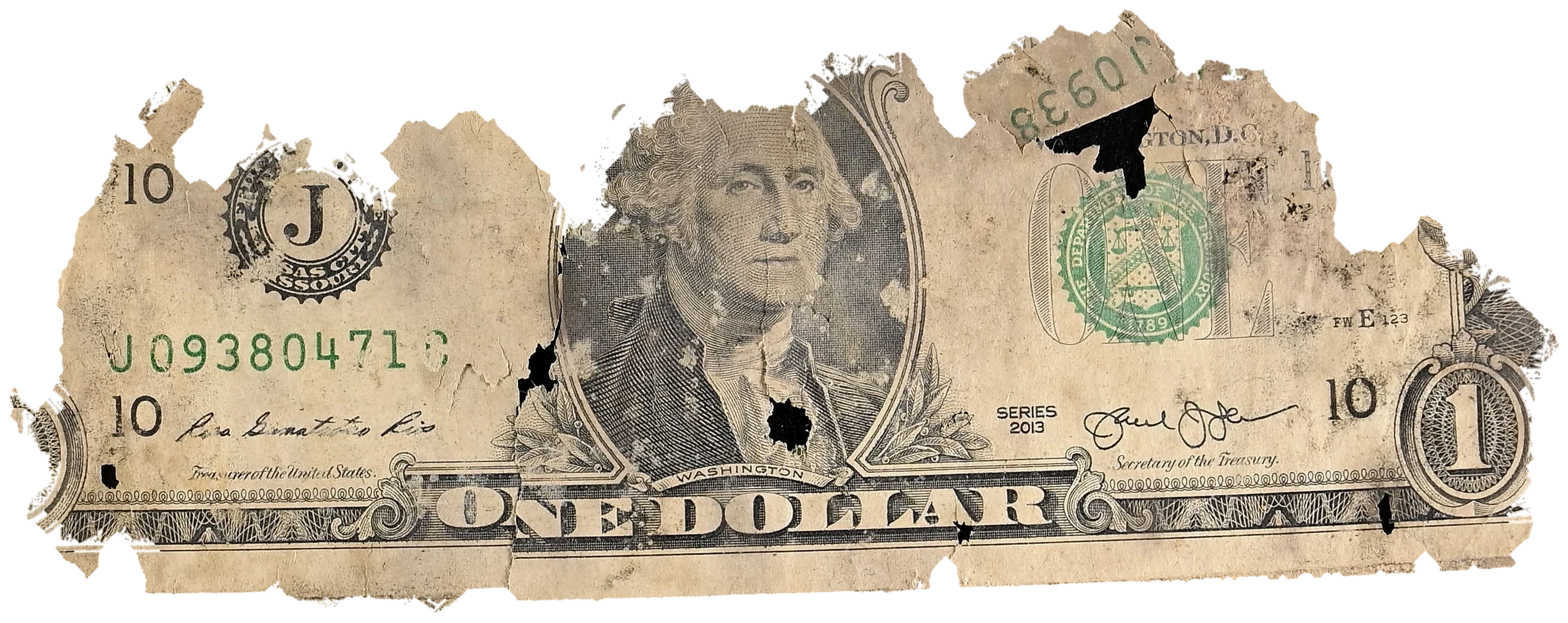
Now try it live. Below is specimen FF-J09380471C from the collection. It spent two years underground and still reports everything a fresh bill does. Click a number.
Federal Reserve Bank seal
The round black seal left of the portrait names the Federal Reserve Bank that issued the note. Its letter (A through L) is the district code. This specimen reads J: Kansas City.
District number
The district's number (1 through 12) is printed four times near the corners of the face. It always agrees with the seal letter: A is 1, B is 2, and so on to L is 12. Here: 10, matching J.
Serial number
Printed twice, upper right and lower left, in green. On a $1 bill the FIRST letter repeats the district code. The last letter is the block letter, which advances as printings fill up. A star at the end means a replacement note. This bill's upper serial is half eaten; the lower one survived the burial.
Treasury seal
The green seal on the right belongs to the US Department of the Treasury, laid over the word ONE.
Series year
The series is the design year, not the print year. It changes when the design or the signatures change.
Plate and position marks
Small letters and numbers mark which engraving plate printed the note and where it sat on the sheet. Notes from the Fort Worth, Texas facility carry a small FW.
Signatures
Every note carries two: the Treasurer of the United States on the left and the Secretary of the Treasury on the right.
One more thing your dollar is telling you: it is not paper. US currency is 75% cotton and 25% linen, which is why these bills survived two years in the ground at all.
The doorway
This bill spent two years underground.
See what nature made of 200 of them.