Education wing · by Coldie
What are dollar bills actually made of?
US currency is not wood-pulp paper. Every denomination is printed on a cloth blend of 75% cotton and 25% linen, woven through with tiny red and blue security fibers. That fabric is why a bill survives the washing machine, folds thousands of times without splitting, and, as this collection proves, can spend two years buried in wet ground and still come out in one piece.
The best evidence I can offer is the collection itself. Newspaper would have returned to soil in a season. These came back after two years of water, dirt, iron and mold: stained, bloomed, eaten at the edges, but whole enough for a grading service to seal and certify. Cotton rag endures. That is the whole reason there is a Filthy Fiat instead of a hole full of mulch.
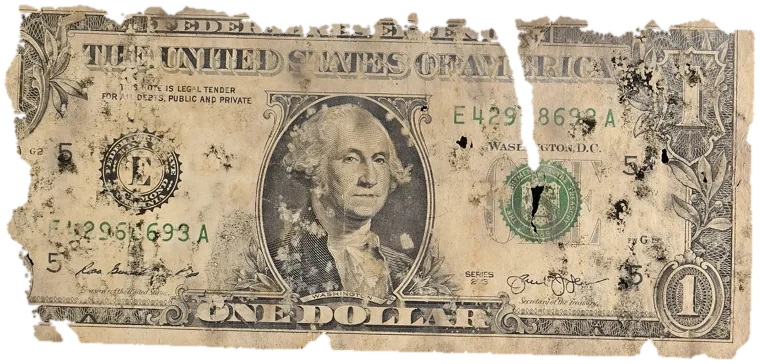
The blend is a Treasury specification: three parts cotton to one part linen, with the red and blue fibers embedded in the sheet (not printed on) as an anti-counterfeiting feature dating back to the 1800s. The distinctive crackle of a new bill is the linen talking.
Mold complicates the compliment. The same organic fiber that makes currency durable also makes it edible: damp cotton is a meal, and the ground is patient. So the material that saved these bills is also what decorated them. The full menu of what grew and rusted onto each note is measured on every specimen's page.
Related questions
Who makes the currency paper?
Crane, the Massachusetts paper maker, has supplied US currency paper since 1879. The blend and security features are made to Treasury specification.
How long does a $1 bill last in circulation?
The Federal Reserve estimates a median lifespan of about 6.6 years for a $1 note. Larger denominations circulate less and last longer.
Why not switch to plastic (polymer) notes like other countries?
Dozens of countries use polymer banknotes, but the US has announced no switch. The cotton-linen blend, its suppliers and its security features are deeply built into US currency design.
Can you tell real currency fabric from paper?
Feel is the classic test: currency stock is thinner, stronger and crisper than printer paper, and the red and blue fibers sit inside the sheet. Counterfeits often print the fibers on the surface.
The doorway
Everything on this page is illustrated with real dollars that spent two years underground.
See what nature made of themSOURCES · BEP: how money is made (paper and ink) · UPDATED 2026-07-05