Education wing · by Coldie
What are the 12 Federal Reserve Banks, and which one issued your dollar?
The Federal Reserve system is built from 12 regional banks, created by the Federal Reserve Act of 1913: A-1 Boston, B-2 New York, C-3 Philadelphia, D-4 Cleveland, E-5 Richmond, F-6 Atlanta, G-7 Chicago, H-8 St. Louis, I-9 Minneapolis, J-10 Kansas City, K-11 Dallas, L-12 San Francisco. Every dollar bill declares its issuer: the letter inside the round black seal on the face, matched by the number printed four times near the corners, and on $1 bills repeated as the serial number's first letter.
The letter is a birthplace. A dollar sealed E was put into circulation through the Federal Reserve Bank of Richmond; an L dollar entered the world through San Francisco. The boundaries of the twelve districts were drawn in 1913 and have barely moved since, which makes the letters a little map of American finance frozen in time: two banks for Missouri, none west of Kansas City until the coast.
Type your dollar's letter here and it will name the bank.
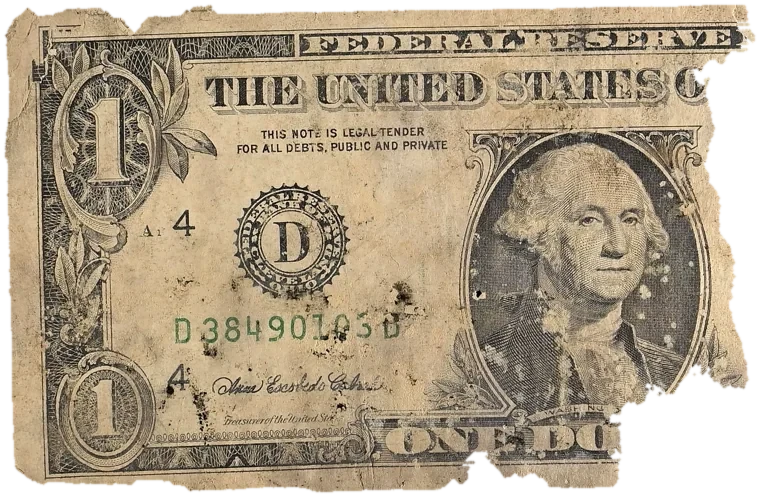
This collection holds bills from all 12 districts, buried side by side and decayed each in their own way. You can filter the gallery by district and compare, say, what the ground did to New York money versus Dallas money. Nature did not care where they were born, which is its own little essay on money.
And one bill in the collection claims two birthplaces at once: the seal says Richmond, the upper serial says Chicago. That should be impossible. Here is that story.
Related questions
Why are there exactly 12 districts?
The Federal Reserve Act of 1913 was a compromise between a single central bank and no central bank at all: twelve regional banks, each serving its own district, under a board in Washington.
Do the districts still matter?
Operationally, yes: the regional banks distribute cash, clear payments, supervise banks in their territory and feed regional data into national policy. The letter on your bill is the cash-distribution system showing itself.
Which Federal Reserve Bank prints the money?
None of them. Printing belongs to the Bureau of Engraving and Printing, part of the Treasury. The Federal Reserve Banks order notes and issue them into circulation. More on that split: Treasury vs. Federal Reserve, below in the Learn index.
Can a bill have two districts?
It should not. The seal, corner numbers and serial prefix should all agree. When they do not, you are looking at a printing error or an anomaly that needs verification.
The doorway
Everything on this page is illustrated with real dollars that spent two years underground.
See what nature made of themSOURCES · Federal Reserve: structure of the Federal Reserve System · UPDATED 2026-07-05